

Building Trust, Growing Power, Creating Change
Building a stronger Near Northeast Denver, together.
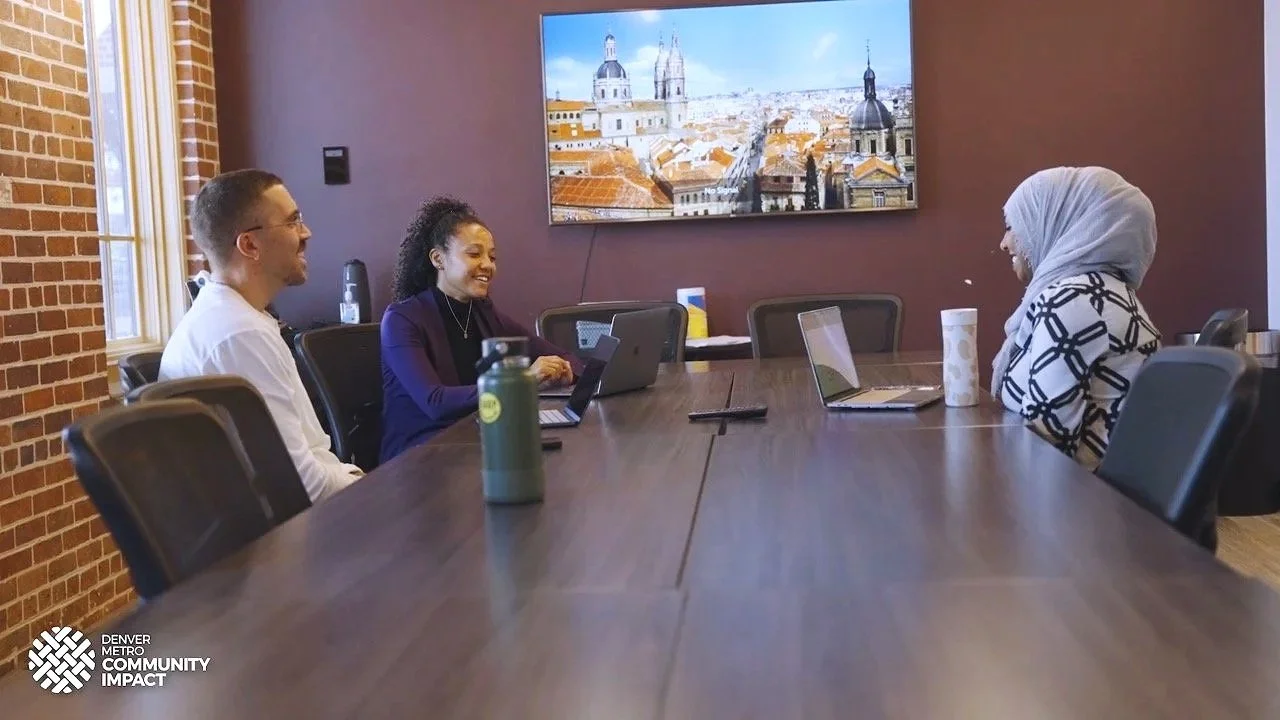
If we make Near Northeast Denver affordable and livable, it will only happen together.
Our shared networks contain knowledge and resources to help us build community power which is defined as the ability to create or resist change by focusing on non-zero sum strategies that share power and resist control (Goodman et.al., 1998). As you may know this is difficult work. It’s human to seek control but unfortunately, the means to achieve it is usually power. When you come to the DMCI table we ask you to resist the urge to control outcomes and embrace the process of collective progress; help us build something different. We can use the social capital of generational bonds and contemporary connections, we can build the power to resist change happening to us and insist on it happening with us.
What if we stopped trying to control the outcome?
First, we have to trust each other. Pairing trust with a willingness to intervene for the common good of the community, grows our power, our collective efficacy (Comstock, 2010). Trusting that we all have the best interest of Near North East Denver in our minds and hearts will take time, we will make mistakes, we will need to offer and receive grace, but there is no shortcut for developing trust.
What’s at stake is authentic connection to one another and to our community. Connectedness is noticing how care and trust occur and how respect is shared (Whitlock, 2007). This is a psychological process happening for adults and youth through observation and experience. Community disconnection is a key risk factor for substance use, one systemic condition we plan to target for our EPIC work. By participating with us at DMCI you are also helping remedy this systemic condition by committing to a process of mutual care and respect. When it comes to trust and connection, these actions make the difference, the process is the solution, the journey is the outcome.
We are drawing a direct line from building community power and connection to preventing substance use. It’s one of several upstream factors we want to improve together with you. Follow the link to get involved with our work.
References
Comstock, N., Dickinson, L. M., Marshall, J. A., Soobader, M. J., Turbin, M. S., Buchenau, M., & Litt, J. S. (2010). Neighborhood attachment and its correlates: Exploring neighborhood conditions, collective efficacy, and gardening. Journal of environmental psychology, 30(4), 435-442.
Goodman, R. M., Speers, M. A., McLeroy, K., Fawcett, S., Kegler, M., Parker, E., ... & Wallerstein, N. (1998). Identifying and defining the dimensions of community capacity to provide a basis for measurement. Health education & behavior, 25(3), 258-278.
Whitlock, J. (2007). The role of adults, public space, and power in adolescent community connectedness. Journal of community psychology, 35(4), 499-518.